Column · @holdenzvxt255
Top 10 Design Patterns for Interlocking Paver Driveway Setup
A driveway sets the tone for a building long before a site visitor reaches the front door. Pattern selection does the aesthetic heavy training, yet it likewise impacts exactly how the surface handles transforming tires, winter freeze cycles, and the drip line from your automobile. After years of specifying and setting up interlacing pavers, I have actually learned that the very best patterns are not only handsome from the visual, they also forgive small base motion, drive away ruts from limited turns, and streamline upkeep over a twenty year perspective. The ten patterns below meet that test when coupled with strong base job and wise detailing.
Why pattern matters past looks
A paver pattern is not simply accessory. The geometry of exactly how units interlock and transfer push into the base establishes whether a driveway shakes off a 3 factor turn or exposes hairline joint creep by the second wintertime. Patterns with multi‑directional interlock, like herringbone, withstand side shear from steering at a stop. Direct patterns, like running bond, decrease quick and look tidy, however need cautious positioning so the wheel path does not press courses apart.
Pattern additionally controls cut waste at edges, which strikes the budget. A 45 degree area, as an example, wastes a lot more at straight sides than a 90 level design, though it pays back in toughness. If you prepare to continue the hardscape right into a front stroll, the pattern can either unify both or help set apart the Driveway Paving Installation from the Sidewalk Paving Installation without clashing.
Start with the ground, not the pattern
Every great driveway sits on excellent bones. The subgrade has to be proof‑rolled and formed to drop water, usually with 1 to 2 percent crown or cross‑slope. On clay, I specify a woven geotextile to isolate the base and protect against pumping. Base depth varies with soil and paver driveway Walnut Creek environment. On well‑drained gravelly soils, 6 to 8 inches of compacted, open‑graded rock can do in residential setups. On silts or extensive clays, or where freeze‑thaw cycles are extreme, prepare for 10 to 12 inches and perhaps 2 layers of geotextile, with compaction to a minimum of 98 percent Modified Proctor. Under tight turn areas, I add an additional inch or two of base and pay added attention to compaction at the top 2 lifts.
Most driveways function well with a bed linens layer of cleaned concrete sand at concerning 1 inch, screeded true. Do not bed thicker to conceal base humps, it simply develops soft spots. Common paver density for driveways is 70 to 80 millimeters. Thinner 60 millimeter devices can function if the base is superb, however I do not advise them where hefty SUVs, trailers, or periodic delivery van prevail. Edge restraints, whether concrete, steel, or a put aesthetic, stop lateral creep. Those details matter as long as the pattern.
How to pick promptly when you have five minutes
When time is tight, gone through these 5 checkpoints to tighten the field.
- Traffic and turning: frequent tight turns favor herringbone or ashlar, straight in‑and‑out website traffic can tolerate running bond.
- Edge geometry: rectangle-shaped driveways waste less with direct or 90 degree patterns, curved edges welcome ashlar or fan layouts.
- Snow management: smooth patterns with fewer little joints, like running bond or 90 degree herringbone, clear much easier with a plow.
- Budget and speed: running bond, 90 degree herringbone, and basketweave ordinary fastest, fans and round areas take longer and add cuts.
- Aesthetic intent: modern homes match stack bond or ashlar with clean boundaries, typical facades prefer basketweave, pinwheel, or cobblestone fan.
The leading 10 patterns that make their keep
45 degree herringbone
If I might utilize one area pattern for every single driveway, this would be it. The 45 degree alignment spreads wheel loads in multiple directions and locks training courses with each other so snugly that lateral creep is unusual when the base is right. It really feels dynamic from the curb and pairs well with soldier‑course borders. Anticipate more cutting at straight edges, because the area meets the border at diagonals. On rectangle-shaped driveways, I typically inset a rectangle-shaped header that frames the field, which both consists of the diagonals and offers a clean termination where pavers meet concrete aprons or garage slabs.
A 45 level field also transitions well right into a perpendicular sidewalk. When a front stroll branches off, rotate its pattern at 90 degrees relative to the home's facade for a subtle change, or carry the diagonal through a boundary break. Snow elimination is very easy since joint lines do not run in long continuous grooves.
90 degree herringbone
All the interlock benefits of herringbone with less cutting at straight sides. The simple L‑shaped rhythm lines up with the geometry of the majority of homes and checks out a little extra organized than 45 levels. If your driveway is lengthy and slim, the 90 level pattern aids visually widen the space when oriented across the width. In high‑traffic courts where kids bike and turn circles, I have seen 90 degree herringbone maintain joints tight after a years with just regular polymeric sand touch‑ups.
The method is beginning with a dead‑straight control line. Snap it down the center, check square to the garage, after that outlined test rows to confirm equivalent cuts at both sides. With rectangle-shaped pavers, the waste rate is small. This pattern is a solid match for residential properties that desire toughness initially and timeless style.
Basketweave
Two by 2 rectangular shapes alternate positioning to mimic woven strips. The appearance evokes historical brickwork and matches older homes, yard homes, and any type of facade with divided‑light windows or shutters. Since basketweave has a repeating module, it enters quick, which helps on larger Driveway Paving Installment jobs. It is less immune to shear than herringbone. Because of that, I avoid basketweave near limited transforming span unless I thicken the base and secure the edges down with a concrete aesthetic or a double soldier course.
Use tonal variation within the very same shade household to maintain the surface area from looking level. A little rolled pavers help, softening light and concealing the unpreventable small scuffs that driveways collect. I additionally like a different sailor course border to frame the weave and maintain it from visually tearing at the margins.
Running bond
This is the paver world's straight guy. Training courses run in one instructions, each row startled by half a device. The tidy lines enhance contemporary homes and supply speed on website. Orientation issues. If you run the bond parallel to a common turning course, guiding forces can gradually push rows, even with good edge restraint. Orient the bond throughout the primary wheel course or across the driveway width to minimize that danger. Where the driveway meets a pathway, use the stroll to reset orientation for aesthetic interest.
Running bond succeeds when you need to connect the driveway to a Walkway Paving Setup without making the front course feel like a slip lane. Bring the bond right into the walk, then transform the stagger or include a contrasting band to indicate a pedestrian zone. This pattern additionally clears well under a snowblower, given that the blade stumbles upon short joints rather than along lengthy seams.
Stack bond
Stack bond, often called a grid, lines up joints vertically and flat. The look is crisp and building, ideal against flat‑panel garage doors and minimal landscapes. Structurally it has the least interlock of the patterns here, so I book it for driveways with straight in‑and‑out web traffic and excellent bases. To mitigate the linearity, I usually make use of thicker pavers or a textured surface. A double boundary is essential to keep the area settled and contain the straight lines.
If you desire stack bond yet bother with stamina, mix in routine cross programs. For example, every 6th row ends up being a header program vertical to web traffic. This hybrid maintains the appearance tight while including micro‑interlocks that resist creep.
Ashlar (random modular)
Ashlar utilizes a family members of rectangle-shaped dimensions laid in a non‑repeating, pre‑engineered pattern. The outcome really feels all-natural and high end, with broken joint lines that spread force well. It does a great job concealing repairs. When an energy cut requires you to draw and communicate pavers, the aesthetic noise of ashlar hides the joint better than nearly any kind of other pattern.
Layout self-control is the difference between good-looking ashlar and a mess. Adhere to the producer's pattern sheets or develop a two or 3 program repeat that stays clear of lengthy constant lines. I make use of string lines to keep the whole field tracking straight, and I dry lay a small mockup to educate the team on the series. Ashlar is forgiving at gentle curves, which reduces waste for flared drive entries or circular drop‑offs.
Cobblestone fan
Sometimes called European follower, this pattern curves small rectangle-shaped or a little trapezoidal units right into embedded arcs. Nothing defeats it for an old‑world yard. The fan is additionally a clever architectural selection in tight turning circles due to the fact that the arcs naturally take radial tons. The catch is labor. Fans are slower to establish and need even more custom-made cutting, specifically at the boundary where arcs meet straight borders.
For domestic range driveways, I like to schedule the follower for an arrival court or a circular inset, with a simpler area somewhere else. Use granite or basalt tones for authenticity if it matches your house. Freeze‑thaw does not faze a well‑compacted follower, however make sure polymeric joint sand is well shaken right into the joints, since the rounded pattern has numerous little gaps.
Circular or radial fields
A complete circular field matches turn-arounds, electric motor courts, or properties with a central feature like a water fountain. Even on rectangular great deals, a radial inset can separate long terms and disguise slight out‑of‑square conditions. Like the follower, radial fields distribute transforming loads in numerous directions. They likewise require client layout. I break concentric rings and dry fit the center medallion up until the geometry really feels right. Borders end up being crucial, because the outer training courses will certainly meet the straight edges of the driveway at sharp angles.
If your garage doors are not completely lined up, do not let a large circular geometry call focus to the alter. Rather, move the circle to straighten with a landscape component, or minimize its size and border it with an ashlar apron that absorbs the misalignment.
Pinwheel
Four little rectangles focus on a larger square or rectangular shape, creating a limited, vibrant appearance. Pinwheel patterns add interest close to your home where you see pavers at walking rate. For driveways, pinwheel functions finest in smaller sized areas, such as a car park bay or the top of the drive, instead of throughout the whole surface. The several joints present no concern for snow, but ensure to make use of a high quality polymeric sand and portable from numerous directions to completely secure them.
Because the module repeats, pinwheel lays faster than its details suggests. I like a subtle two‑tone palette to maintain it from reading as checkerboard. Boundary programs need to be easy, typically a single soldier program, so the field can take facility stage.
Stretcher area with periodic headers, occasionally called the I‑pattern
Imagine a running bond field that is interrupted at normal periods by a header training course, perpendicular to traffic. Those cross ties every third or fourth row transform a direct area into a more powerful weave and aesthetically echo the wood appearance of old carriage drives. This pattern delivers more hold on inclines than pure running bond and separate long lines that could otherwise telegraph base irregularities.
Spacing the headers transforms the tempo. Limited spacing, every 3rd training course, really feels a lot more rustic and robust. Bigger spacing, every 5th, checks out modern-day. In any case, align the headers with functional changes, such as at the beginning of a parking bay or in front of a garage apron, to provide the impression that the rhythm is responding to the site.
Borders, bands, and insets that make patterns pop
Even the toughest pattern take advantage of a great structure. Borders keep lines directly, secure field edges from vehicle pressure, and supply an area to soak up cuts. A soldier program, where pavers stand on end along the side, is the workhorse. A sailor program uses pavers laid alongside the edge. Increasing up boundaries lets you play with comparison, either tone on tone or a deliberate color jump to tie in home window trim or a roofing color.
Bands can break up futures, line up to columns or lights, and act as speed hints for vehicle drivers. I commonly use a 6 to 12 inch band at the apron to transition to asphalt or concrete, then repeat that band at sensible intervals down the drive. Insets, such as a round medallion or house number panel, set into a simpler field, provide custom character without complicating installment across the entire expanse.
Color, appearance, and the reality of tire marks
Pavers will certainly see rubber, drips of oil, and the occasional corrosion discolor. Smooth surfaces highlight every little thing. Textured or gently rolled faces hide more and give wet grip. Colors differ more than examples recommend, specifically in big runs where batches blend. I get 5 to 10 percent additional and mix from numerous pallets as we lay to stay clear of banding. For darker driveways, a mid‑gray joint sand keeps a regular look. Light sands make the joint grid found out more highly, which can help flatter patterns like basketweave and pinwheel.
If you prepare to connect the driveway pattern right into a Walkway Paving Setup, take into consideration moving color tone as opposed to the pattern. A half‑step lighter or darker at the stroll keeps connection while signifying a pedestrian zone.
Permeable versions without giving up style
Most of the patterns above have permeable analogs. Absorptive pavers use bigger joint spacers and open‑graded base layers to allow water with. Herringbone in either alignment remains my top pick for permeable driveways because the joint network is dense and disperses seepage throughout the surface. Ashlar works well also with modular permeable units. Anticipate deeper base areas, typically 12 to 18 inches of open‑graded stone, plus underdrains if indigenous dirts are tight. Rakes can operate on absorptive areas, yet Meta paving products set shoes a little bit higher to prevent scooping joint aggregate.
A small field‑layout checklist that saves rework
- Establish control: break a primary control line square to the garage or to a view line that matters from the road, after that test two completely dry programs to validate equal cuts at edges.
- Build the frame: set boundaries and side restraints initially where possible, or a minimum of set recommendation borders to hold the field true as you infill.
- Lay from the center out: begin patterns in the aesthetic center or at a feature, not from a solitary side, to keep cuts balanced and joint lines straight.
- Compact in lifts: shake the area after every 100 to 150 square feet laid to seat devices right into the bedding sand, however after sweeping in polymeric sand.
- Check transitions: where pavers fulfill concrete, asphalt, or the garage slab, validate elevation and incline, keep a limited resistance on lippage to avoid capturing tires or plow edges.
Common blunders that unravel excellent patterns
The initially is neglecting drain. A stunning herringbone area will certainly fail if water beings in front of the garage and cycles through freeze‑thaw. Forming the subgrade and base to shed water away from frameworks. Next is thin sides. The external 2 feet of any driveway take the force of side force from turning tires. I thicken the base there and utilize a stiff restraint, especially with direct patterns.
Another pitfall is misaligned control lines. Patterns that rely on repeating modules, like basketweave and pinwheel, magnify tiny mistakes. Check square early and typically. Teams in some cases over‑sand too early. Polymerically supporting joints before all cut work and cleanup can lock in blunders and leave haze. Keep the area clean, portable correctly, then mist and heal the sand per the supplier's guidance.
Finally, product selection issues. Not every brick‑sized paver works for driveways. Verify compressive stamina rankings and freeze‑thaw sturdiness, especially in northern environments or coastal zones where deicing salts prevail. Where salt is hefty, pick a paver line rated for it, and seal uniquely if the manufacturer recommends it.
Pattern pairings genuine sites
For a narrow urban lot with a two‑car garage, a 90 degree herringbone area oriented throughout the size aesthetically broadens the strategy. Include a soldier program boundary in a slightly darker tone to mount the area, after that flip positioning to running bond at the front walk for a refined shift that guides the eye.
On a wooded residential property with a sweeping approach, ashlar brings an all-natural cadence, flexing quickly with a gentle contour. At the turn‑around near the front door, inset a small rock fan to secure the area, linking it to a rock stoop or chimney.
On a mid‑century home with simple lines, stack bond can feel exactly ideal if the base is bulletproof. To provide it a lot more hold and stamina, go down a header program every fourth row and maintain the color palette limited. A narrow seafarer program border completes it cleanly without taking the scene.
Installation pace and spending plan reality
Pattern complexity shows up twice in the budget plan, when in labor and once more in waste. A running bond or 90 degree herringbone area over a rectangular pad can relocate at 350 to 500 square feet per day with a three‑person crew after base preparation is complete. A follower or radial area could go down that to 150 to 250 square feet due to the cuts. Waste can swing from roughly 5 percent on simple rectangles as much as 12 to 18 percent on angled or rounded formats. Limited control with your vendor prevents hold-ups when you require even more of an unusual shade or shape.
Equipment issues as well. A relatively easy to fix plate compactor with appropriate centrifugal force for thicker driveway systems seats the field more evenly than a light ahead plate. Rubber mats secure distinctive or toppled faces during compaction. Screed pipelines, cut to the slope of the drive, maintain the bed linen layer real so the pattern reads crisp and the last surface drains.
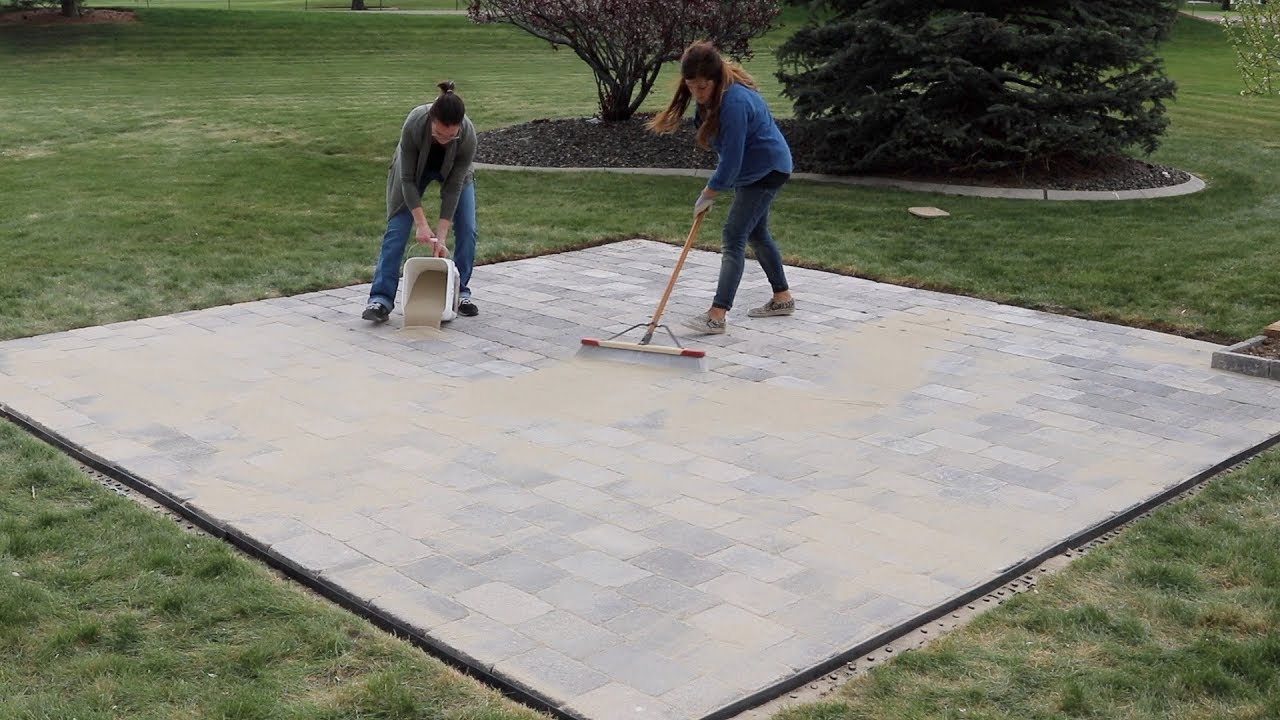
Maintenance and just how patterns age
Herringbone and ashlar patterns often tend to age quietly. Their damaged lines hide the initial indications of joint loss or mild base settlement, and separated repair work blend in. Running bond and stack bond age extra officially. Any type of surge shows as a much longer line, which is why I book those for drives I recognize will certainly drain pipes and hold quality. Fans and round areas can last wonderfully, yet they need disciplined joint maintenance since numerous little joints can open faster under seasonal movement.
A light wash in springtime, a fresh move of polymeric joint sand every few years, and punctual tarnish treatment prolong life. If you intend to reseal, examine a tiny location first. Some sealants strengthen shade greater than anticipated, which can alter the balance between field and border.
Bringing it together
The right pattern for an interlocking paver driveway equilibriums framework, setup, and the way the space is utilized. If lorries will certainly kip down tight arcs, lean into herringbone or ashlar. If the home reviews conventional and directly, basketweave or a stretcher area with headers feels at home. Conserve fanwork for a place of honor or a round court. Allow boundaries do quiet work waiting together.
Tie the driveway to any type of Sidewalk Paving Setup with either a common scheme or a calculated change in alignment. Most of all, protect the investment with a base that fits your dirt and climate, thoughtful side restriction, and mindful layout. Patterns are the visible story. The craft underfoot is what makes that tale hold up to day-to-day life.